


What happened?
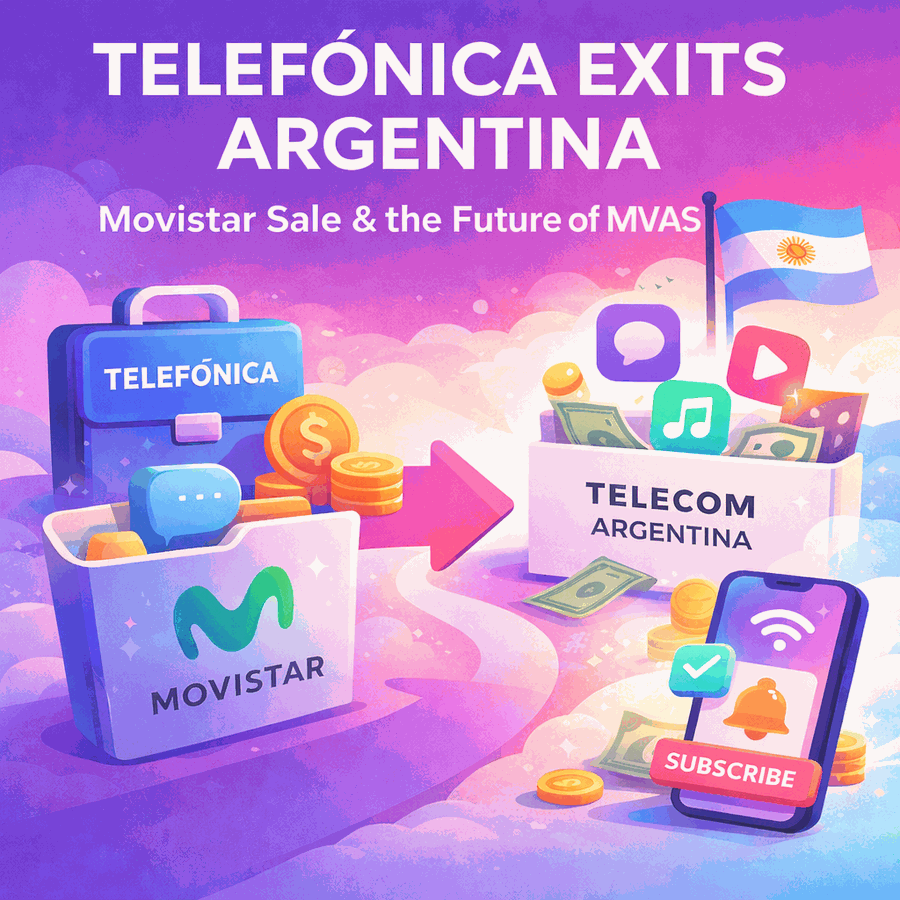
The Spanish telecom company Telefónica has fully sold its Argentine subsidiary Movistar Argentina to the local operator Telecom Argentina. The official sale agreement was announced on February 24, 2025, and was fully completed by March 2025. The sale amount totaled USD 1.245 billion. As a result, Telefónica has effectively exited the Argentine market, selling 100% of its stake — all Movistar assets have transferred to the buyer’s control. The sold package included all of Movistar’s infrastructure and services in the country, including mobile and fixed-line communications, internet access, as well as related value-added services (VAS). In other words, Telefónica Argentina ceased to exist as part of the Telefónica SA group, and the Spanish company is no longer present in Argentina’s telecom market.
However, the merger of two major operators did not go unnoticed by the authorities. The Argentine government expressed concerns that after the acquisition, around 70% of the country’s telecommunications services would be concentrated in the hands of a single company, and announced measures against potential monopolization. The deal is under review by regulators — the national telecom agency Enacom and the antitrust commission (CNDC). At the same time, Telecom Argentina has already outlined its integration strategy: the company plans to merge Movistar’s business with its own operations, while continuing to invest in infrastructure development (5G, fiber) and subscriber services. In particular, Telecom’s management stated its readiness to accelerate 5G deployment and expand network coverage to provide the country with world-class telecom infrastructure.
Part of a broader strategy of foreign companies exiting
The sale of Movistar Argentina fits into a broader trend: in recent years, a number of foreign corporations have been leaving the Argentine market amid economic difficulties (hyperinflation, currency controls, etc.). Telefónica’s deal has become another example of this wave of foreign business exits from South America’s second-largest economy. Telefónica itself has long pursued a strategy of optimizing its presence in Latin America. Back in 2019, the Spanish group announced a strategy to focus on key markets (Spain, Brazil, Germany, the United Kingdom), gradually reducing assets in other countries in the region.
The sale of the Argentine unit is part of a global strategy to reduce presence in Spanish-speaking America and cut debt levels. In recent years, Telefónica has already divested a number of assets: subsidiaries in Central America have been sold, and negotiations are underway to sell businesses in Mexico, Colombia, and other countries. At the same time, the company is seeking to free up resources for investment in new technologies, particularly the development of 5G.
It is worth noting that Telecom Argentina — the buyer of Movistar — is controlled by local investors (including the media holding Grupo Clarín) and has already expanded through a merger with cable operator Cablevisión in 2018. The acquisition of Telefónica’s business further strengthens Telecom, making it the largest player in the mobile communications market (estimates suggest the combined base will exceed 35–40 million mobile customers, about two-thirds of the market). The only remaining major competitor will be Mexico’s Claro. Such dominance, however, requires regulatory approval — the Milei government has temporarily suspended the legal finalization of the deal to develop conditions that would prevent abuse of a monopolistic position.
What this means for MVAS services
MVAS (Mobile Value-Added Services) are additional operator services beyond basic calls and internet access. MVAS include entertainment and content subscriptions, paid messaging, ringtones, mobile finance, and other services delivered through the operator’s infrastructure and typically billed to the subscriber’s account.
In Movistar Argentina’s portfolio, such services occupied a notable place: the company offered customers a variety of content subscriptions, news, games, entertainment portals, and other VAS services under the Movistar brand. According to reports, Movistar provided not only mobile and fixed communications, but also various value-added services to its subscribers. After the change of ownership, the fate of these services has become an open question.
Experts note that when a telecom business transitions under another operator’s control, a review and restructuring of the MVAS segment is inevitable. Telecom Argentina has already announced a large-scale rebranding and integration: all group services will be consolidated under the single Personal brand, and the Movistar brand will cease independent existence after the formal completion of the acquisition. In other words, Movistar’s previous services will either be reformatted or absorbed into Telecom’s ecosystem.
The new owner aims for a unified digital offering for customers — under the Personal brand, mobile communications, internet, content, and financial services will be consolidated. It has already been announced that Personal Flow will become the single entertainment platform (digital TV and video streaming), and Personal Pay will serve as a universal mobile wallet replacing Movistar services.
What may change for MVAS during integration
• Elimination of the Movistar brand and platform consolidation.
After the deal is approved, all Movistar products in Argentina will be migrated under the Personal brand. Customers will gradually notice service renaming and redirection to Telecom’s unified platforms. For example, if Movistar had its own apps or portals for music, video, or news, their functions will move into the Personal ecosystem — into apps like Mi Personal or the Personal Flow portal. Movistar content services will be integrated into Personal Flow, while bonus programs and accounts will be merged with Telecom’s systems. This is done to simplify the offering and achieve economies of scale.
• Closure of duplicate and outdated services.
The new operator typically conducts an audit of all MVAS services of the previous owner. Low-demand or outdated subscriptions may be discontinued, especially if Telecom already has similar offerings. Paid subscriptions launched by Telefónica may be canceled if they do not fit the new owner’s strategy, or replaced with updated products. Such steps are typical during operator mergers and are aimed at optimizing the product lineup.
• New digital services instead of old ones.
At the same time, Telecom declares a course toward developing modern VAS products. The company plans significant investments in expanding value-added services — from video on demand and the Internet of Things to fintech and cloud services. Official statements emphasize that in the coming years the focus will be on Video-on-Demand, IoT, fintech services, e-commerce, AI services, and cloud platforms. This means a shift in focus from Movistar’s classic content subscriptions to modern digital products integrated into the single Personal app. As the network is modernized and 5G is rolled out, opportunities for new MVAS will only expand.
Summary
For end users of Movistar, changes will occur gradually. In the short term, the most noticeable changes will be branding-related — the Movistar logo will be replaced by Personal, and customer service will move to Telecom’s unified channels. Updates to content offerings and access to services of the combined company are expected, including products that were previously exclusive to Personal. Billing system migration and re-registration of some subscriptions are possible.
Full integration of Movistar services into Telecom’s structure will take place after obtaining all necessary regulatory approvals. Until then, Movistar will continue operating in a transitional mode, although strategic decisions regarding MVAS are already being made by the new owner.
Overall, Telefónica’s exit from Argentina marks the end of an entire era for the national telecom market. Movistar as an independent brand will disappear, replaced by the expanded Personal ecosystem. For the MVAS segment, this means large-scale transformation: some services will be discontinued, some reformatted, and new digital services will take their place. The market is entering a phase of change that is being closely watched by both users and content business partners.